How to Choose the Best Monoi Body Oil
The best monoi body oil is the one that actually contains monoï—tiare flowers steeped in coconut oil—in a texture you'll reach for every day. Pure monoï is rich, smells of coconut and flowers, and turns solid in a cool room. Blends with lighter oils stay liquid and sink in faster. Read the label first, then choose by how you'll use it.
Monoï is having a moment, which means the word now turns up on plenty of labels with very little of it inside. Here is how we would choose one if we didn't make our own.

What monoï actually is
Monoï is a Tahitian word meaning "scented oil." It is made by steeping the flowers of the tiare—Gardenia taitensis, the small white gardenia of French Polynesia—in coconut oil until the oil takes on their scent. Polynesians have used it on skin and hair for generations.
There is also an official version. Since 1992, Monoï de Tahiti has been a protected appellation of origin, much like Champagne. To carry that name, at least 15 tiare flowers go into every litre of refined coconut oil, pressed on Tahiti, and steep for at least 15 days. Everything else is monoï in the everyday sense—which can still be lovely. It just isn't the appellation.

My first time in French Polynesia, I wanted to connect with the history of monoï. Along the Road to Monoï, I stopped for treatments made with it, and took in salt air carrying the light scent of tiare. At the tiare gardens, I learned the flowers are picked as buds, before they open, when their fragrance is strongest. From there they go to a room of coconut-oil vats to steep for fifteen days. That traditional process is what makes monoï monoï. It's what we use, too.
— Evelyn Ginossi, founder
1. Find the monoï on the label
Turn the bottle over. On cosmetics sold in the US, ingredients are listed from most to least (those under 1% can appear in any order), so position tells you a lot. Monoï usually appears as two names: Cocos Nucifera (Coconut) Oil and Gardenia Taitensis Flower. If the front says tiare or monoï but the back has no Gardenia Taitensis, the scent may come from fragrance alone.
2. Know what the words on the front mean
- "Monoï de Tahiti" — the protected name. It should meet the rules above.
- "Made with monoï" — real monoï is in there.
- "Monoï-inspired" or "tiare-scented" — a mood, not necessarily an ingredient. Check the back.
None of these is a verdict on quality. A blend made with genuine monoï can make a better daily oil than a pure one you never use. The point is knowing what you are paying for.
3. Decide: pure monoï or a blend?
Pure monoï is coconut oil and flowers, nothing else. It is rich, a little heavy, and unmistakably coconut. In a cool room it turns solid and white; stand the bottle in warm water for a minute and it melts back. It is wonderful on very dry legs and on the ends of your hair, less so if you want to get dressed straight away.
A blend pairs monoï with lighter oils or silky, fast-absorbing emollients. It stays liquid, sinks in faster and wears more easily under clothes. The trade-off is less pure coconut character, and more depends on how well it has been formulated.
If you oil after every shower and dress five minutes later, a blend will suit you better. If you want a slow weekend ritual and a rich finish, try pure.
4. Smell it, then read the fragrance line
Tiare on its own is soft and creamy—more skin than perfume. Many monoï oils add fragrance on top, which can be beautiful, and can also be the thing sensitive skin dislikes. Fragrance allergens are named individually in the ingredient list. If fragrance is something your skin reacts to, read them before you buy, and patch test on the inside of your arm for a day.
5. Choose a format you'll actually use
A mist covers legs and arms quickly and uses less. A pour or dropper bottle gives you control for hair and hands. A balm travels without leaking and suits elbows, heels and cuticles. The best oil is the one you don't skip.
What monoï won't do
- It is not sunscreen. Monoï has no SPF unless the label says so. Use it after the sun, never instead of sunscreen.
- It isn't for a coconut allergy. Monoï is mostly coconut oil.
- It is an oil. On very oily skin, a lighter blend or a smaller amount usually works better.
Where ours fits

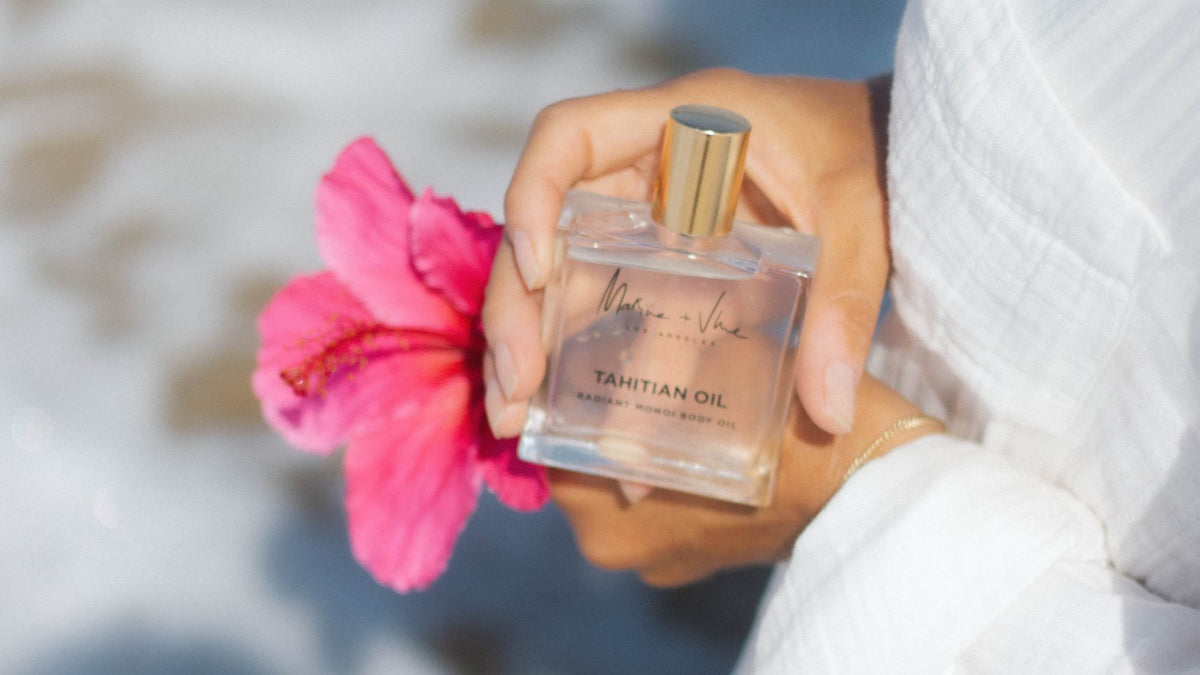
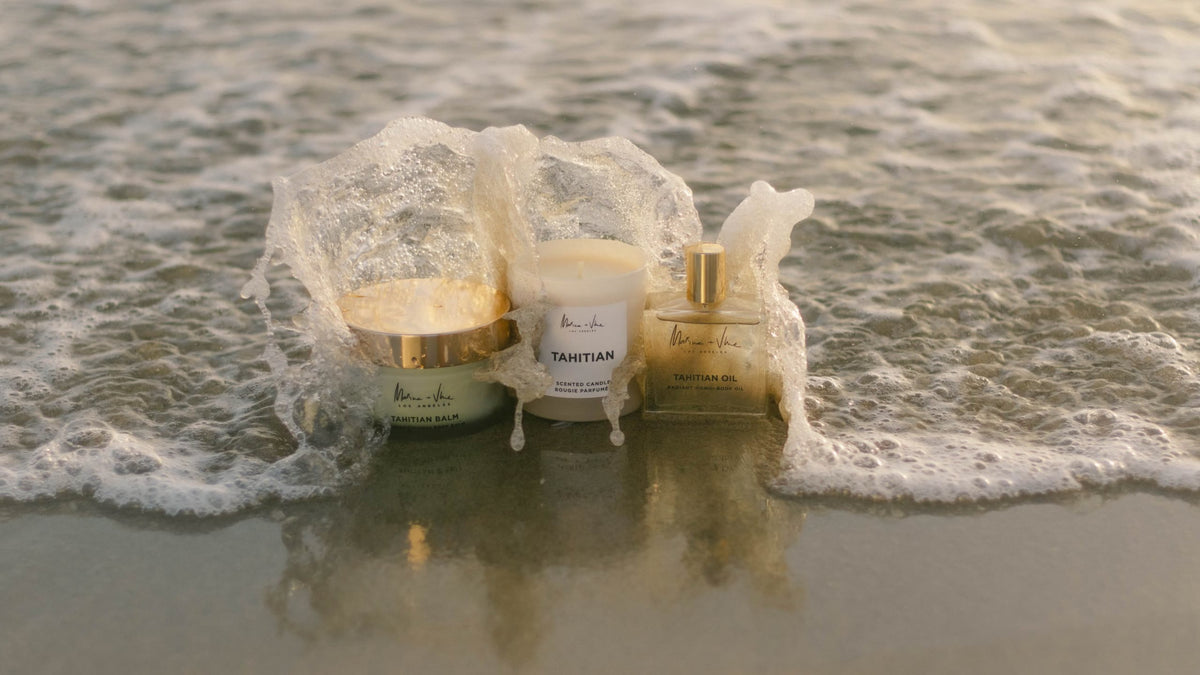
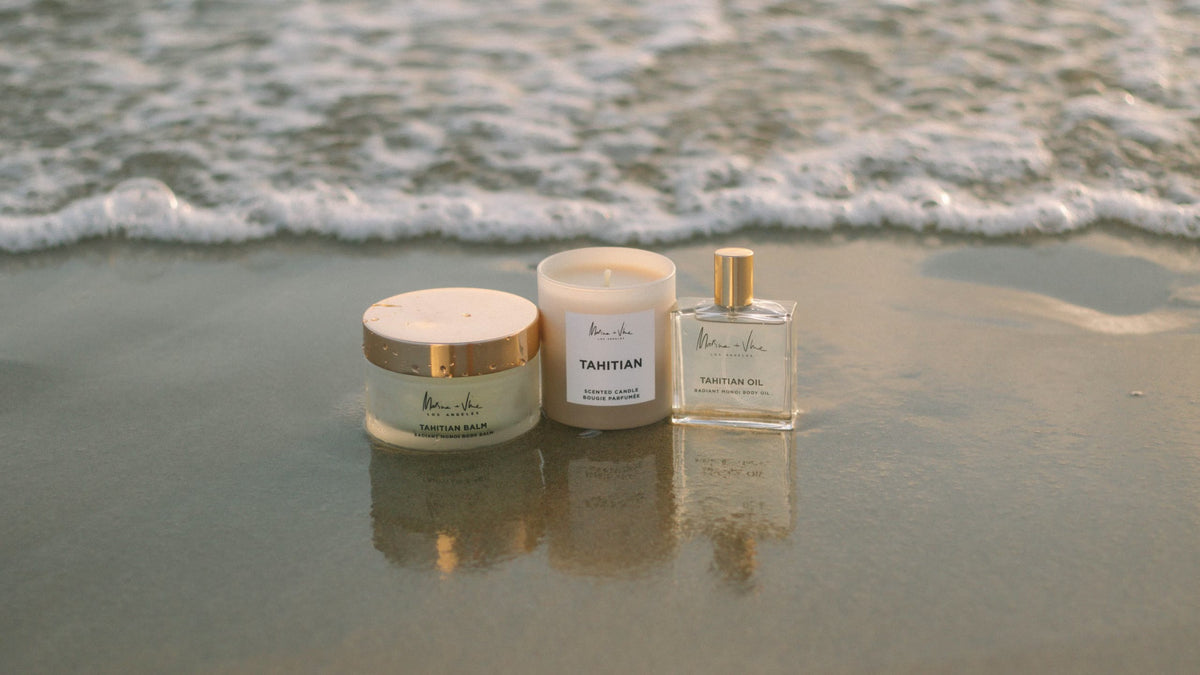
Our Tahitian Oil is a blend: monoï from French Polynesia with kukui, macadamia and passion fruit seed oils on a light base, so it stays liquid and mists onto damp skin. It is fragranced, with a scent developed in Grasse. If you want pure, unadorned monoï, it isn't that—and that's fine. If you would like to try it before committing, there is an 8ml sample.
Questions we're often asked
Is monoi oil good for dry skin?
Yes. Its coconut oil base is rich in fatty acids that soften and moisturize, and it seals in water best on damp skin, straight out of the shower.
Why has my monoi oil gone solid?
Coconut oil turns solid when it's cool. It hasn't spoiled. Warm the bottle in your hands or in warm water and it will melt back. Blends made with lighter oils usually stay liquid.
Is monoi the same as coconut oil?
Monoï is coconut oil that has had tiare flowers steeped in it. The flowers give it its scent, and the steeping is what makes it monoï.
Can I use monoi oil on my hair?
Yes. A drop or two through the ends adds shine and softness. Go lightly near the roots.
Can I use monoi oil as a tanning oil?
Not on its own. Without an SPF it offers no sun protection. Wear sunscreen, and save the oil for afterwards.
Read more: what monoï does for skin, and what monoï actually smells like.