The Benefits of Macadamia Oil
The Benefits of Macadamia Oil
Macadamia oil doesn't have the name recognition of argan or jojoba. It isn't particularly exotic-looking, and until fairly recently, most of us probably associated macadamias more with the bowl of nuts at a hotel bar than with what we put on our skin.
But when we were developing Tahitian Oil, macadamia was one of the ingredients we specifically wanted in the formula.
The reason is fairly straightforward: macadamia oil has an unusually beautiful fatty-acid profile for dry skin. It's rich, but it doesn't feel overly heavy. It gives body oil that silky slip you want when you're applying it after a shower, and it leaves skin feeling noticeably softer without requiring a thick layer of product.
It also contains something you don't find in particularly high concentrations in many plant oils: palmitoleic acid, or omega-7.
Here's why that matters—and why macadamia oil has remained part of Tahitian Oil from the beginning.
What Is Macadamia Oil?
Macadamia oil is pressed from the nuts of the macadamia tree, native to Australia and now cultivated in warm climates around the world.
The oil is made up predominantly of monounsaturated fatty acids, particularly oleic acid (omega-9), along with an unusually significant amount of palmitoleic acid (omega-7). It also contains smaller amounts of linoleic acid and naturally occurring compounds including tocopherols, phytosterols and squalene.
That's a lot of skincare language for an ingredient that ultimately does something quite simple very well: it makes dry skin feel soft again.
What Are the Benefits of Macadamia Oil for Skin?
Macadamia oil is an emollient, which means it helps soften and smooth the outer surface of the skin.
If you've ever looked at your legs in winter and wondered when they became quite so dry—or stepped off a long flight feeling as though the airplane removed every drop of moisture from your body—this is the sort of ingredient that makes sense.
Its fatty acids help supplement the lipids on the skin's surface, improving the way dry skin feels and helping support the barrier that keeps moisture from escaping.
It softens dry, rough skin
This is where macadamia oil really earns its place.
Its high concentration of oleic acid gives the oil a rich, conditioning feel, making it particularly well suited to dry areas such as legs, arms, elbows and heels.
Applied to slightly damp skin, it helps seal in moisture while smoothing the surface. The difference is tactile: skin simply feels better.
It's naturally rich in omega-7
Macadamia oil is an interesting botanical source of palmitoleic acid, a monounsaturated fatty acid better known as omega-7.
Palmitoleic acid also occurs naturally in human skin lipids, which is partly why it has attracted interest in cosmetic formulations. Macadamia oils can contain meaningful amounts of it, although the exact fatty-acid composition varies depending on the variety and where the nuts are grown.
You'll sometimes see claims that omega-7 “replaces” palmitoleic acid lost from aging skin. We think that's taking the science further than it needs to go.
The more useful point is this: macadamia's combination of oleic and palmitoleic fatty acids gives it an exceptionally conditioning texture, which is one reason it works so beautifully in body oil.
It helps support the skin barrier
Your skin barrier isn't an abstract skincare concept. It's the outer layer responsible for keeping the good things in—particularly water—and much of the outside world out.
Lipids are an important part of that barrier.
Macadamia oil doesn't magically rebuild skin overnight, but its fatty acids act as emollients, supplementing the oils at the skin's surface and helping dry skin feel smoother and more comfortable.
This is particularly useful after anything that tends to leave skin depleted: cold weather, air-conditioning, swimming, travel or simply taking showers that are much hotter than every dermatologist would prefer.
We're guilty of the last one, too.
Oleic Acid, Linoleic Acid and Squalene: What's Actually in Macadamia Oil?
Ingredient lists can quickly turn into chemistry lessons, so here's the part actually worth knowing.
Oleic acid (omega-9) makes up a large proportion of macadamia oil. It's a monounsaturated fatty acid that contributes to the oil's rich, emollient quality.
Palmitoleic acid (omega-7) is what makes macadamia particularly interesting. It occurs at notably higher levels in macadamia than in many familiar plant oils.
Linoleic acid (omega-6) is an essential fatty acid and a component of the lipids involved in healthy skin-barrier function.
Macadamia oil can also contain tocopherols, phytosterols, polyphenols and squalene, naturally occurring compounds that contribute to the oil's overall composition and antioxidant activity.
You don't need to memorize any of this to use it. But it does explain why a seemingly simple nut oil can be such a useful skincare ingredient.
Is Macadamia Oil Good for Mature Skin?
This is a question we see often, probably because of macadamia oil's omega-7 content.
We wouldn't call any botanical oil an anti-aging treatment. That's the sort of promise beauty marketing makes very easily and skin rarely honors quite so literally.
What macadamia oil is very good at is addressing some of the things that become more noticeable as skin matures: dryness, loss of suppleness and a rougher texture.
Sebum production and skin-barrier function can change with age, which is one reason richer emollients often become more appealing over time. An oil that leaves skin softer, smoother and better conditioned can make a visible difference in how healthy skin looks—even if it isn't “turning back the clock.”
Frankly, we're much more interested in good skin than younger-looking skin anyway.
Does Macadamia Oil Feel Greasy?
Pure macadamia oil is richer than some very lightweight botanical oils, so formulation matters.
This is one reason we don't use it alone.
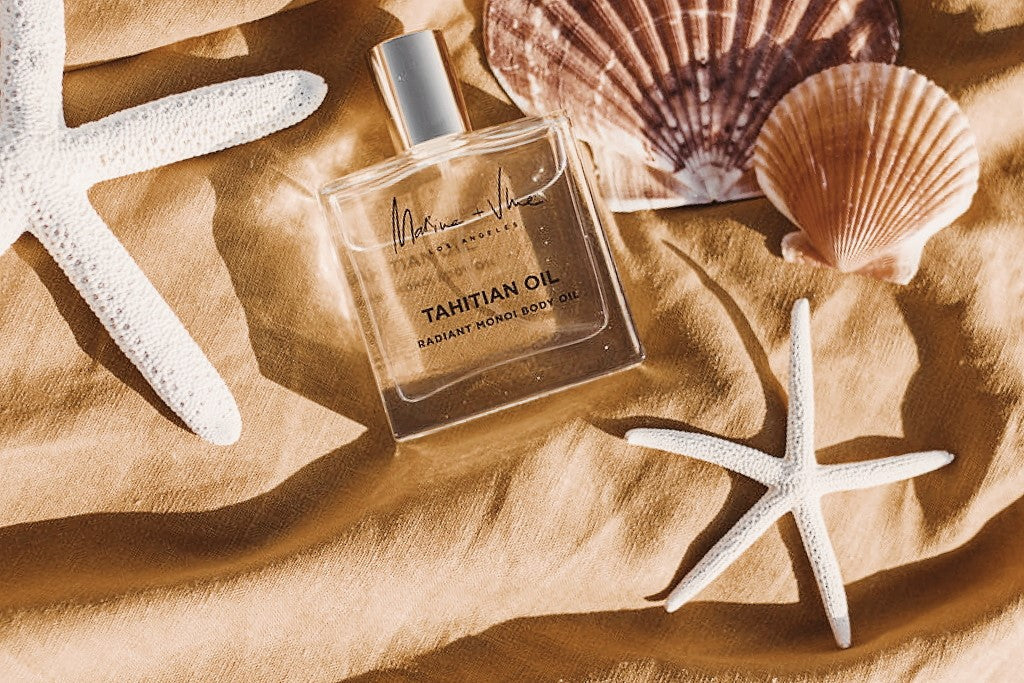
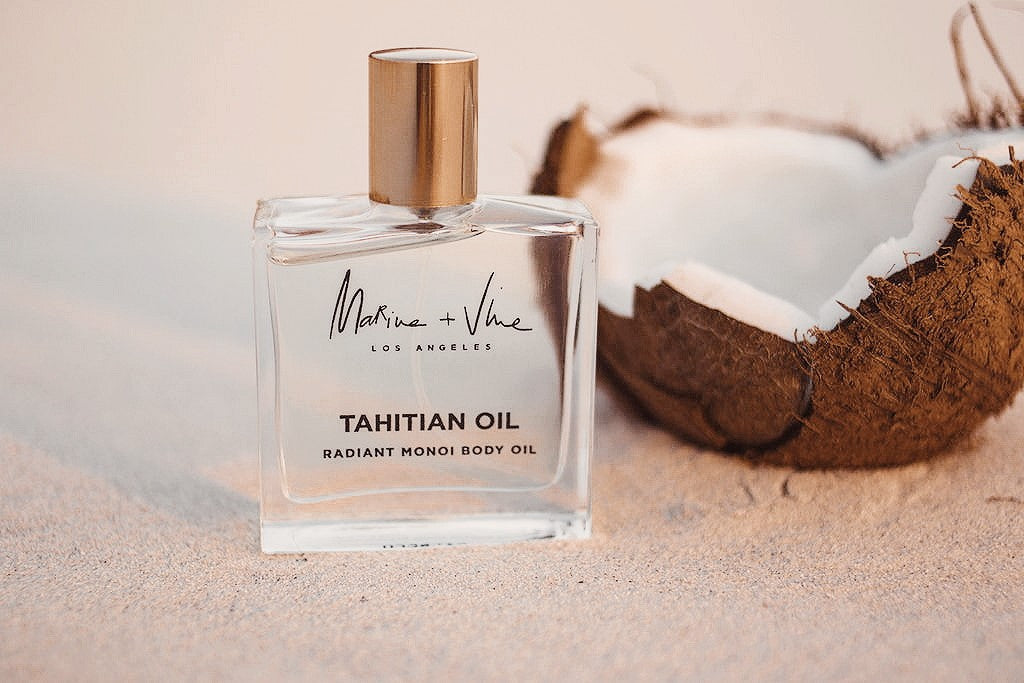
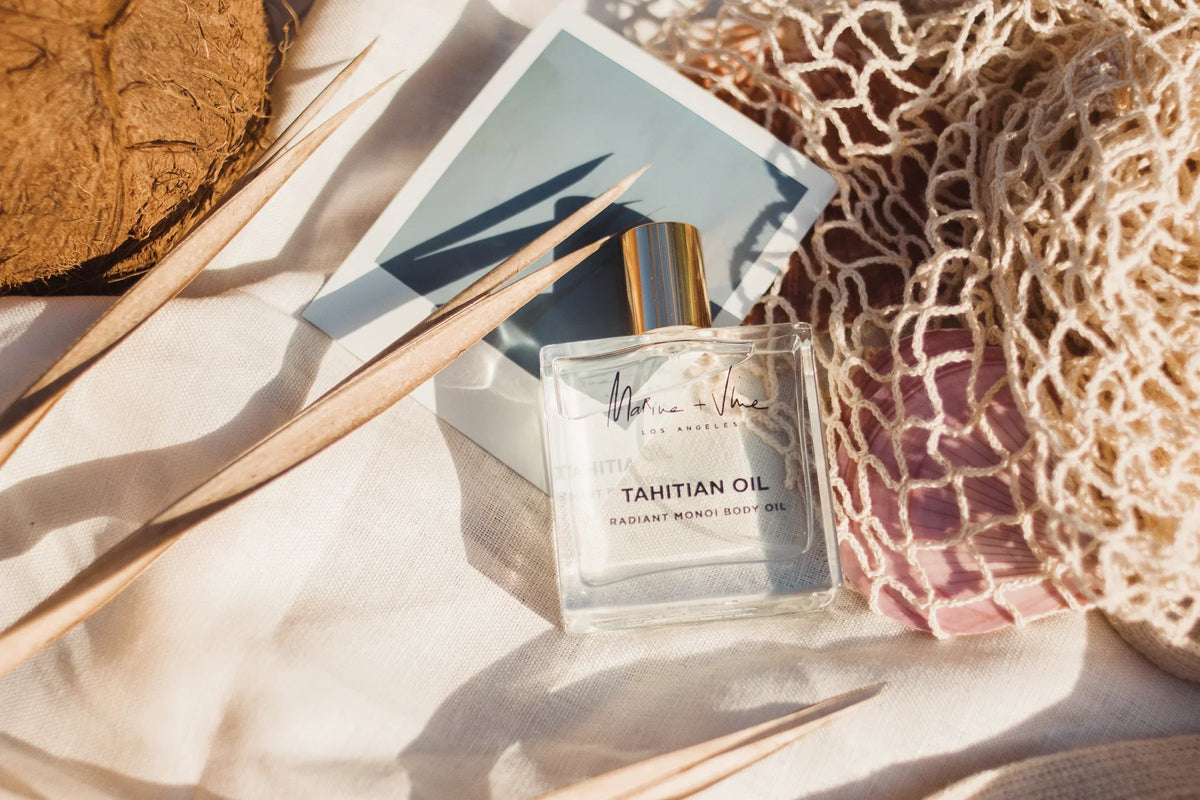
In Marine + Vine Tahitian Oil, macadamia is blended with Monoï de Tahiti, kukui and passion fruit oils. The balance gives us the conditioning benefits of macadamia without making the finished oil feel overly heavy.
Applied correctly—ideally over slightly damp skin—you shouldn't need very much.
The goal isn't to look freshly basted. It's simply soft skin with a little sheen.
Why We Use Macadamia Oil in Tahitian Oil
Every oil in Tahitian Oil has a reason for being there.
Monoi is the foundation and gives the formula much of its character. Kukui brings a lighter feel. Passion fruit oil helps balance the blend. And macadamia gives it richness and that particularly silky, conditioned finish.
Together, they create something we like much more than any of the individual oils on their own.
That's an important distinction because skincare sometimes treats a single “hero ingredient” as though everything else in the bottle is scenery. We don't formulate that way.
Macadamia oil is excellent. Macadamia oil in the right blend is better.
How to Use Macadamia Oil for Skin
If you're using a body oil containing macadamia, the best time to apply it is just after bathing.
Lightly towel off, leaving a little water on the skin, then massage the oil over your body. The oil helps seal in that moisture while its fatty acids soften the skin's surface.
Pay particular attention to legs, elbows, knees and anywhere that tends to become dry.
You can use body oil on completely dry skin, too—we do—but applying it while the skin is still damp is particularly effective when dryness is the problem you're trying to solve.
And if you're heading somewhere warm, smooth a little extra over bare legs and shoulders before going out. Not because your skin needs to gleam at dinner, necessarily.
But it certainly doesn't hurt.
The Ingredient We Almost Never Talk About
Monoi understandably gets most of the attention in Tahitian Oil. It has Tahiti, tiaré flowers and more than a little romance on its side.
Macadamia is less glamorous on paper.
But it's one of those ingredients you appreciate once you start paying attention to how a product actually feels: the slip as you massage it over damp skin, the softness a few hours later, the fact that your legs still feel moisturized the next morning.
Beauty doesn't always need a dramatic story.
Sometimes an ingredient earns its place simply because it's very, very good at its job.
Discover Marine + Vine Tahitian Oil, made with Monoï de Tahiti, macadamia, kukui and passion fruit oils for soft, conditioned, beautifully luminous skin.