THE TRUTH ABOUT VITAMIN E
The Truth About Vitamin E
Vitamin E is one of those skincare ingredients we've known about for so long that most of us stopped asking what it actually does.
It's on moisturizer labels. It's in body oils. It's sold in little capsules at the drugstore. Somewhere along the way, “contains vitamin E” became shorthand for this is probably good for your skin.
The truth is more interesting.
Vitamin E isn't actually one ingredient. It's a family of eight naturally occurring compounds, and while they share certain characteristics, they aren't identical. Some are called tocopherols. Others are tocotrienols. And researchers are still learning how those differences matter for skin.
So before we tell you why we care about vitamin E at Marine + Vine, it's worth clearing up what it actually is.
What Is Vitamin E?
Vitamin E is a fat-soluble antioxidant, which means it has a particular affinity for the lipid-rich parts of our bodies—including the oils and cell membranes in our skin.
Its primary job as an antioxidant is to help neutralize free radicals: unstable molecules generated by normal biological processes and by environmental factors such as UV exposure and pollution.
Free radicals aren't inherently sinister; they're part of life. The problem is an excess of them, which can contribute to oxidative stress and damage lipids, proteins and other cellular components over time.
Antioxidants help interrupt that process.
And vitamin E is one of the antioxidants naturally present in our skin.
The Part Most People Don't Know: There Are Eight Forms of Vitamin E
Here's where vitamin E gets considerably more interesting.
The vitamin E family contains two groups:
Tocopherols: alpha, beta, gamma and delta.
Tocotrienols: alpha, beta, gamma and delta.
That's eight forms in total.
Alpha-tocopherol is the form most abundant in human tissues, which helps explain why “vitamin E” and “tocopherol” are often treated as though they're interchangeable.
They're not.
Tocotrienols have a slightly different molecular structure, and that difference affects how they behave. Research into their potential antioxidant and skin-protective properties has grown considerably, although there's still much more to learn.
We find that far more interesting than pretending every form of vitamin E does exactly the same thing.
Tocopherols vs. Tocotrienols: What's the Difference?
You don't need a chemistry degree for this part.
Both tocopherols and tocotrienols function as antioxidants. Their molecular structures differ in the side chain attached to the vitamin E molecule, and researchers believe this influences how they move within cell membranes and behave biologically.
Tocopherols—particularly alpha-tocopherol—have been studied for decades and remain the forms you'll see most often in skincare.
Tocotrienols are less famous.
That doesn't necessarily mean they're better, despite some rather enthusiastic claims you'll find online. But laboratory and emerging skin research suggests tocotrienols have interesting antioxidant and anti-inflammatory properties of their own.
A 2022 systematic review looking specifically at tocotrienols and aging skin found promising evidence involving UV exposure, inflammation, pigmentation and skin moisture, while also concluding that more research is needed.
Which is usually where good skincare science lands: interesting, promising, and not an excuse to claim miracles.
What Does Vitamin E Actually Do for Skin?
The reason vitamin E has remained relevant in skincare for decades is fairly simple: skin is constantly exposed to oxidative stress.
UV light is one of the biggest contributors. Pollution and other environmental stressors play a role as well.
Vitamin E acts as an antioxidant, helping protect lipids from oxidation. Because those lipids are an important part of the skin barrier, vitamin E has obvious relevance to maintaining healthy-looking skin.
But there's an important distinction here.
Vitamin E is not sunscreen.
It doesn't replace SPF, and putting an antioxidant-rich body oil on before spending six hours in the sun does not give you permission to skip sunscreen. Think of antioxidants as part of a broader approach to caring for skin, not an invisible shield against UV damage.
SPF still gets that job.
Why Vitamin E and Botanical Oils Make Sense Together
This is the part we find particularly interesting.
Vitamin E is fat-soluble, and many botanical oils naturally contain forms of vitamin E along with fatty acids and other plant compounds.
That means you don't necessarily need to approach vitamin E as an isolated ingredient added to an otherwise empty formula.
Plant oils bring their own chemistry with them.
Depending on the plant, an oil may contain tocopherols, tocotrienols or both, alongside compounds such as phytosterols, polyphenols and squalene. The exact composition varies enormously by botanical source, variety, growing conditions and processing.
It's one of the reasons we became interested in formulating with botanical oils in the first place. An oil isn't simply an oily delivery system. It has a composition of its own.
Where Vitamin E Fits Into Tahitian Oil
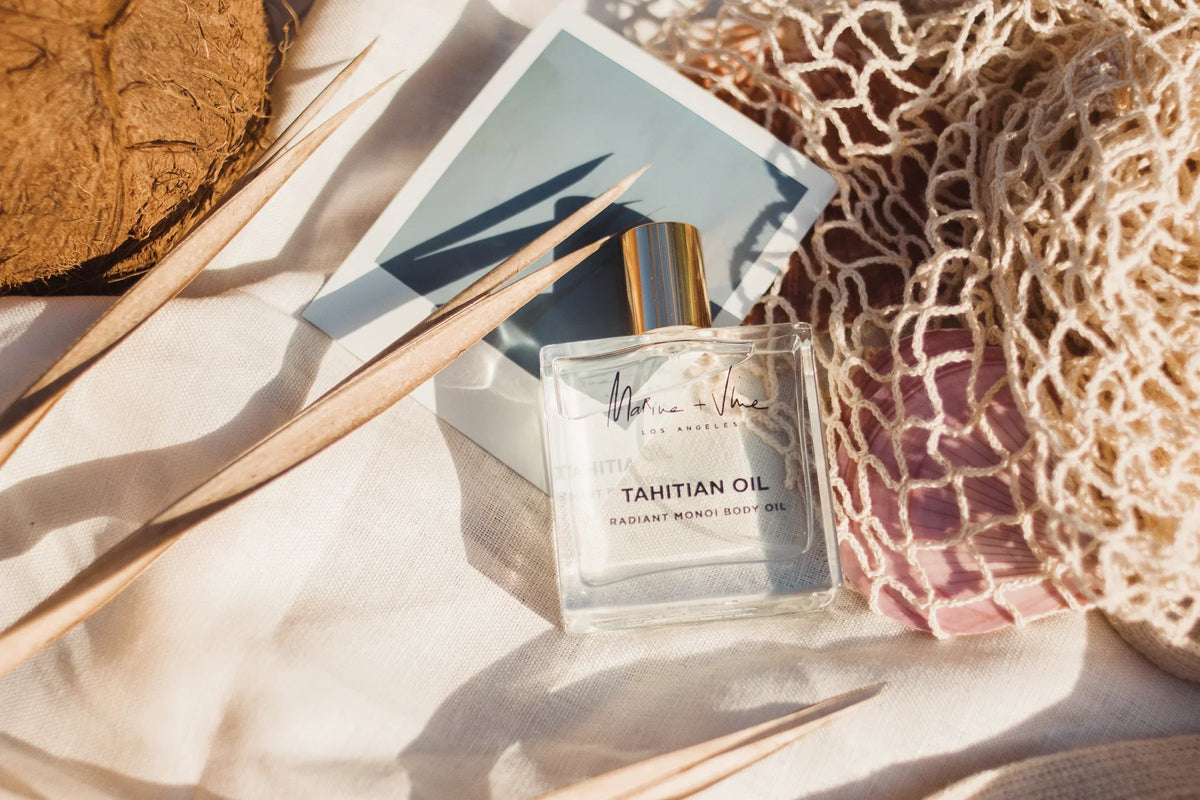
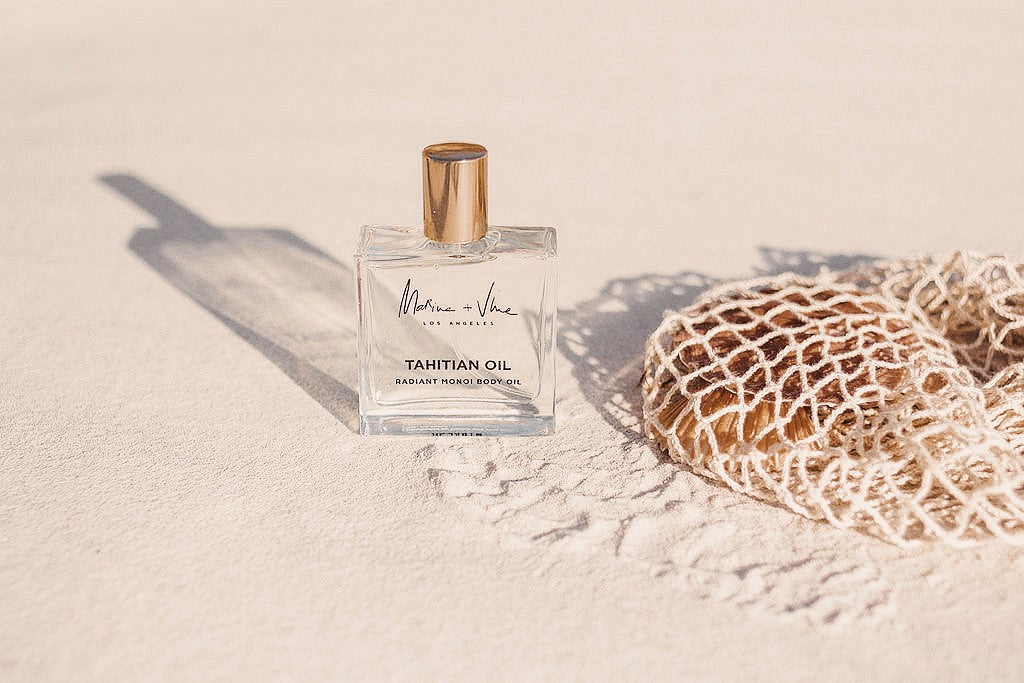
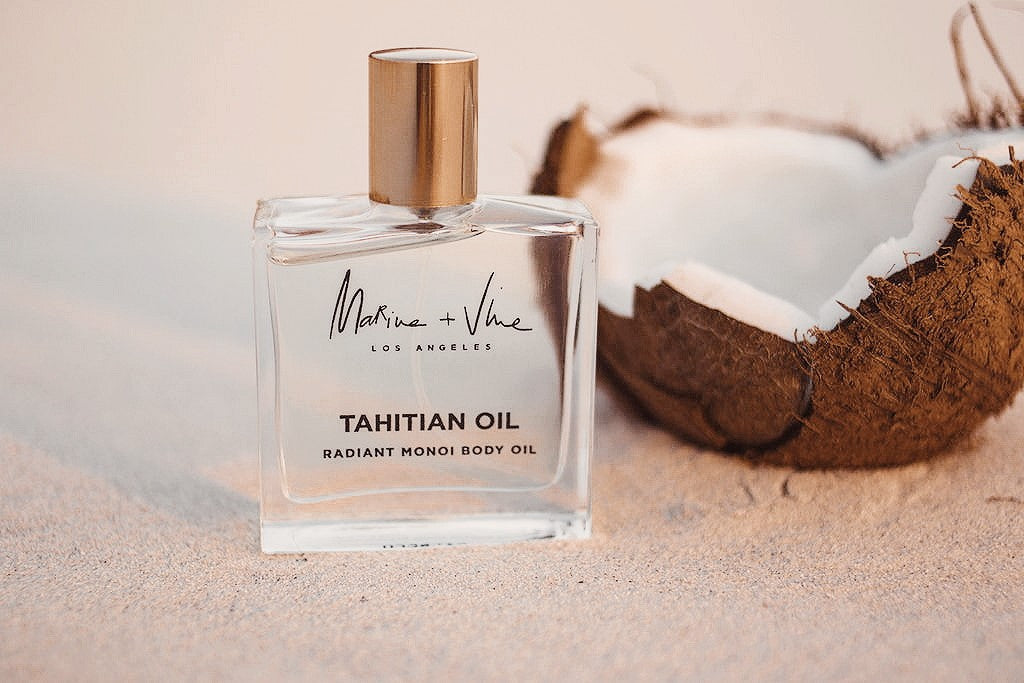
When we developed Marine + Vine Tahitian Oil, we weren't interested in building the formula around one fashionable antioxidant and then making it the headline.
We started with oils we genuinely wanted to put on our skin.
Monoï de Tahiti, macadamia, kukui and passion fruit oils each bring a different fatty-acid profile, texture and collection of naturally occurring plant compounds to the formula.
Macadamia gives the blend richness and slip. Kukui keeps it light. Passion fruit brings its own antioxidant profile. Monoi provides the beautifully emollient coconut-oil foundation—and, of course, much of the reason opening the bottle feels a little like going somewhere.
Vitamin E is part of that larger story.
And we prefer thinking about skincare that way: not as a competition to see which ingredient can have the biggest percentage printed on the front of a bottle, but as a formula in which the ingredients make sense together.
Does Vitamin E Prevent Wrinkles?
This is where beauty marketing tends to get ahead of itself.
Oxidative stress contributes to the processes involved in skin aging, and antioxidants such as vitamin E can help defend against oxidative damage. That is well established.
Does that mean putting vitamin E on your skin will erase wrinkles?
No.
And we'd be suspicious of anyone promising that it will.
There is research into vitamin E's photoprotective, barrier-supporting and antioxidant roles in skin, but dermatology reviews continue to note that controlled human studies are limited for many of the sweeping claims associated with topical vitamin E.
For us, the more realistic goal is also the more appealing one: keep skin moisturized, support its barrier, protect it from unnecessary environmental stress and let healthy skin look healthy.
That's enough.
The Best Way to Use Antioxidant-Rich Body Oil
There is no special vitamin E technique.
If you're using Tahitian Oil, apply it after bathing while your skin is still slightly damp. The water provides hydration; the oils help soften the skin and reduce moisture loss.
We especially love it after anything that leaves skin feeling depleted: a flight, a day at the beach, winter weather, too much air-conditioning or one of those showers you know was unnecessarily hot but took anyway.
Use sunscreen during the day. Use a good oil to keep your skin comfortable and conditioned.
Beauty can occasionally be that straightforward.
So, Is Vitamin E Worth the Hype?
Yes—with a little perspective.
Vitamin E is an important antioxidant naturally found in human skin and in many of the botanical oils we've used for generations. Its different forms are more complex than the single phrase “vitamin E” on an ingredient label suggests, and tocotrienols in particular remain an interesting area of research.
But we don't think you need to turn your bathroom into a laboratory to benefit from any of this.
Eat well. Wear sunscreen. Don't smoke. Be reasonably kind to your skin.
And when you step out of the shower, while your skin is still damp, use an oil that makes you actually want to take care of it.
We'll take that over a miracle claim any day.